San Antonio, Texas gives a school group more to learn from in one metro area than almost any other city in the state. The Alamo and four Spanish colonial missions sit a short ride from planetarium shows, cave tours, a botanical garden, a zoo and a row of art museums. That range is why San Antonio field trips fill the calendars of teachers across South Texas, from a kindergarten class meeting its first live animals to a high school group studying the Texas Revolution. This guide gathers San Antonio field trip ideas by subject first, then sorts them by grade band. After that it shows how to build a one-day itinerary, how to book each kind of site, and how to get your group to the city.
History and Social Studies Field Trips in San Antonio
The Alamo anchors most history trips. Students walk the grounds where the 1836 battle took place and see how a Spanish mission, Mission San Antonio de Valero, became a symbol of the Texas Revolution. The Alamo asks school groups to reserve a field trip at least two weeks ahead. Self-guided entry to the Alamo Church is free for students, educators and chaperones, and the Alamo recommends it for groups over 150. The Alamo Exhibit costs $8 per student and the audio tour costs $5 per student. A facilitated Alamo Discovery Tour takes 20 to 120 students per time slot, which suits a class that wants a guide to set the story in order.
San Antonio Missions National Historical Park carries the story further back. Its four missions, Concepción, San José, San Juan and Espada, show how Spanish colonial and Indigenous communities lived, worked and prayed along the river. In 2015 the five San Antonio missions, including the Alamo, joined Rancho de las Cabras and the area's irrigation system on the list of UNESCO World Heritage Sites. It remains the only World Heritage Site in Texas, and it includes 13 miles of flowing historic acequias that students can walk beside. The park's education programs for kindergarten through 12th grade run in the park, in schools and online. They are aligned with TEKS and free to book, and teachers who prefer to lead their own visit can self-guide.
Casa Navarro State Historic Site adds the Tejano story that many field trip plans leave out. Students step into the home of José Antonio Navarro and hear how Tejano families shaped Texas history. The site runs school tours for grades K-2, 3-6, 7-8 and 9-12 at $1 per student. Tours last about 1.5 hours, take 5 to 60 students, and one chaperone for every ten students enters free. The Texas Historical Commission asks groups to book at least two weeks ahead.
Taken together, these three stops give teachers educational field trips in San Antonio for almost any social studies unit, from Spanish settlement to the Texas Revolution to Tejano leadership.
Science, Space and STEM Field Trips
The Scobee Education Center at San Antonio College is the strongest single stop for space and physical science. It runs a planetarium, the Challenger Learning Center and the Micronaut program for young learners. Private planetarium shows cost $150 for up to 40 participants, $250 for up to 70 and $350 for up to 100. Challenger Learning Center missions are written for grades 5 to 12. Students take roles on a simulated space mission for 90 minutes, and a mission costs $575 for 20 to 34 students. Micronaut missions serve Pre-K through grade 3 and cost $460 for 10 to 24 students. A class that wants teamwork, problem solving and a clear science tie-in will get the most from a Challenger mission.
The Witte Museum covers the natural history and science of Texas, with exhibits that connect to life science, earth science and regional history in one visit. It works well for upper elementary and middle school classes that have a unit to anchor the day. The DoSeum is built for early grades, with hands-on rooms where young students learn by touching, building and testing ideas. Pre-K through second grade classes tend to stay engaged there longer than at a traditional museum.
Scobee programs are booked directly through the center, the Witte takes school group reservations through its group sales team, and The DoSeum takes field trip reservations online. Booking early gives you your choice of days.
Nature, Caves and Outdoor Learning
San Antonio has outdoor classrooms for geology, ecology, water science and agriculture, and most sit within a short drive of downtown.
Government Canyon State Natural Area is the largest outdoor option for school groups. It charges no entry fee to school groups with advance notice, and its ranger-led programs are free. Ranger-led trips run on Tuesdays and Thursdays from February through May and from mid-September through December. They take 25 to 100 students and need at least two months' notice. Teachers who prefer to lead their own hike can plan a self-guided visit.
Natural Bridge Caverns and the other Hill Country caves put geology in front of students in the most direct way, with formations that took thousands of years to grow. Buses can park at Natural Bridge Caverns, which keeps arrival simple for a full grade level. The San Antonio Botanical Garden suits plant science and ecosystems units, and Mitchell Lake Audubon Center adds wetland habitat and birdlife for classes studying ecology.
Confluence Park on the San Antonio River turns a water cycle lesson into something students can stand beside and observe. Phil Hardberger Park gives middle school classes open trails for field notebooks and observation work. For agriculture, farm field trips such as Winding Branch Ranch in Bulverde show students animal care, crops and conservation on a working property.
Outdoor trips depend on weather. Build in a backup date or an indoor alternative, and pack water and sun protection for any visit between April and October.
Zoo, Aquarium and Animal Field Trips
San Antonio gives teachers four animal destinations, and each one fits a different kind of lesson. The San Antonio Zoo suits life science units on habitats, adaptations and animal classification, and its size lets a class spend a morning on a few exhibits instead of rushing through all of them. SeaWorld San Antonio runs education programs for school groups with a marine science focus, which suits classes studying ocean ecosystems, rescue and conservation.
SEA LIFE Aquarium at Rivercenter and the San Antonio Aquarium are smaller indoor options. Their size works for early elementary classes with short attention spans, and the indoor setting protects the day from rain or summer heat. Both can sit comfortably beside a River Walk lunch or an Alamo visit.
Guided programs work best when a teacher wants a lesson plan built into the visit, and self-guided visits suit teachers who bring their own worksheets and learning goals. Before booking, check each venue's school or group page for current rates, chaperone ratios and program lengths, since these change from season to season.
Arts, Theater and Culture Field Trips
San Antonio's art museums give students practice in close looking, and each has its own strength. The McNay Art Museum pairs modern and contemporary art with gardens and grounds that suit sketching. The San Antonio Museum of Art covers a wide span of world cultures, which supports geography and world history units. The Briscoe Western Art Museum ties art to the story of the American West, a good match for Texas history classes. Artpace brings in current work by contemporary artists, so older students see what art looks like now.
Live performance adds a second path. The Magik Theatre stages student performances written for young audiences, and the Carver Community Cultural Center offers performance programming rooted in the city's cultural life. For performing arts groups, the Tobin Center and the Majestic Theatre give band, choir, orchestra and theater students a chance to see professional work in grand venues. These trips fit best when a teacher can tie the show to a unit, a script or an upcoming student performance.
Matching San Antonio Field Trips to Grade Level
Sorting by grade keeps a trip tied to what students can absorb. The research supports the effort: in a randomized study, fourth and fifth graders assigned to culturally enriching field trips had fewer behavioral infractions, attended school more often and earned higher exam scores and course grades than a control group, with effects strongest once students reached middle school.
Pre-K to 2nd grade does best with short, hands-on days. The DoSeum, Micronaut missions at Scobee, the zoo, the aquarium and the Botanical Garden keep young students moving. Casa Navarro offers a K-2 tour as well.
Third to fifth grade is where history lines up with the calendar. Texas Grade 4 social studies centers on Texas history, including the Texas Revolution and the reasons for establishing Spanish settlements and missions, so the Alamo and San Antonio Missions National Historical Park fit directly. The Witte Museum and Government Canyon add science.
Sixth to eighth grade works well with seventh grade Texas history at the Alamo, the missions and Casa Navarro. Science classes can book Challenger missions at Scobee, which open at grade 5, and the caves add geology.
Ninth to twelfth grade does well with programs written for older students. Casa Navarro and the missions both offer high school programs, the Challenger mission runs through grade 12, and the Tobin Center, the Majestic Theatre and the art museums serve arts and performance classes.
How to Build a One-Day San Antonio Field Trip Itinerary
A good field trip day pairs sites that sit close together, so students spend their hours learning and not riding. Three pairings cover most plans.
A downtown history day starts at the Alamo in the morning, when crowds are smaller. After a lunch stop, the group walks to Casa Navarro or spends the afternoon along the River Walk, where the river's role in the city's growth makes a natural urban planning lesson.
A Mission Trail day links the missions along the Mission Reach, the river trail that connects them. Start at Mission Concepción or Mission San José, break for lunch, and finish at a second mission in the afternoon. The route follows the story from the earliest mission buildings to the farm and irrigation systems that supported them.
A Broadway corridor day combines the Witte Museum and The DoSeum, with the San Antonio Botanical Garden or the San Antonio Zoo as the afternoon stop. The sites sit near one another, so the bus can unload once in the morning and again after lunch with very little driving between.
A morning site and an afternoon site fit around lunch with room to spare. A third site rarely fits, so one good stop in each half of the day usually serves students better than three rushed ones.
Groups traveling from elsewhere in South Texas plan differently. San Antonio lies a little over two hours from Corpus Christi, and the drive from the Rio Grande Valley or Laredo takes longer. Those groups depart early, choose one main site, add one short stop near it, and leave time for the ride home before dark.
Planning and Booking School Field Trips in San Antonio
Booking windows differ by site. The Alamo and Casa Navarro both ask for at least two weeks' notice, and Government Canyon's ranger-led trips need at least two months. Sites with simulated missions or private shows, such as Scobee, are worth booking early in the semester because the best dates go first. For school field trips in San Antonio, a good rule is to reserve the site before reserving the bus, then confirm both together.
Cost is manageable for most budgets. San Antonio Missions National Historical Park programs are free, self-guided Alamo Church entry is free for students and chaperones, and Government Canyon charges school groups no entry fee. Casa Navarro tours cost $1 per student, and the Alamo Exhibit and audio tour are priced per student. Scobee prices are per show or per mission.
Chaperone and group size rules come from each venue. Government Canyon suggests one parent for every five students age 6 and under and one for every ten students age 7 and up, with hiking groups of 20 or fewer led by two adults. Casa Navarro admits one chaperone per ten students free. Group sizes per time slot run from 5 to 60 at Casa Navarro, 20 to 120 at an Alamo Discovery Tour, 25 to 100 at Government Canyon and 20 to 34 for a Challenger mission, so a large grade level may need to split across slots.
Season matters in Texas. Spring and fall bring mild weather for outdoor sites, and Government Canyon schedules its ranger-led trips in those months. Summer heat makes caves, planetariums and indoor museums the better choices. Spring and fall are also the busiest months for bus bookings, so an early date request keeps vehicle choices open.
Getting Your Group to San Antonio
Distance Brothers runs school trips and educational tours in San Antonio and serves groups traveling from Corpus Christi, the Rio Grande Valley, Laredo and Victoria. Our school trips page covers field trips, campus tours and academic competitions, and the team matches the vehicle to your headcount.
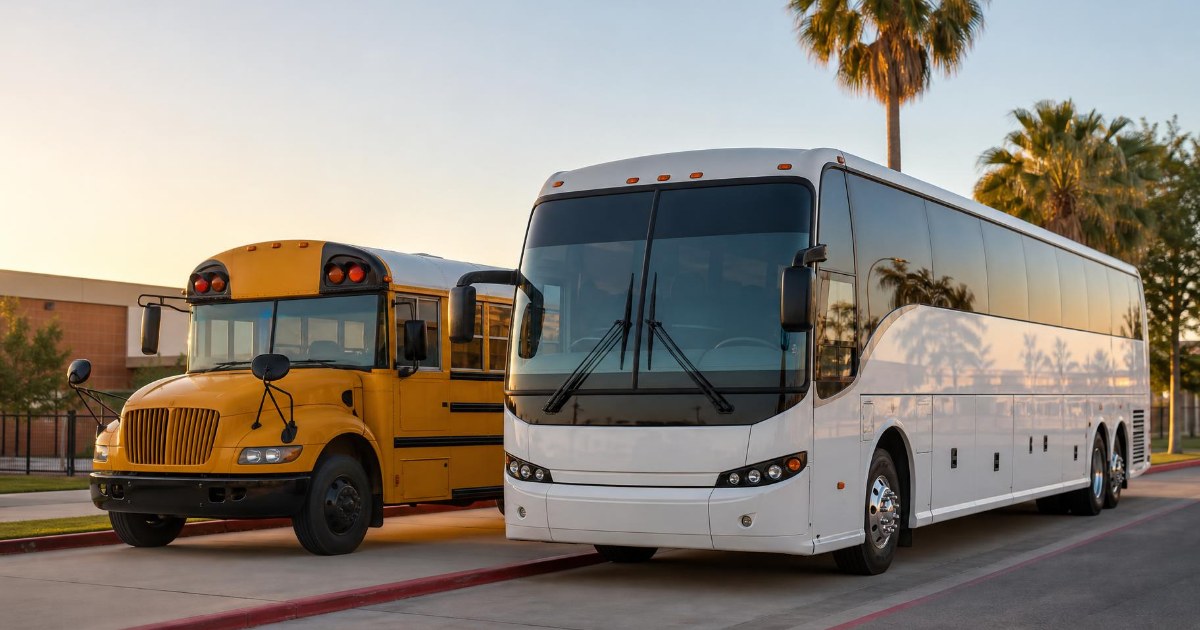
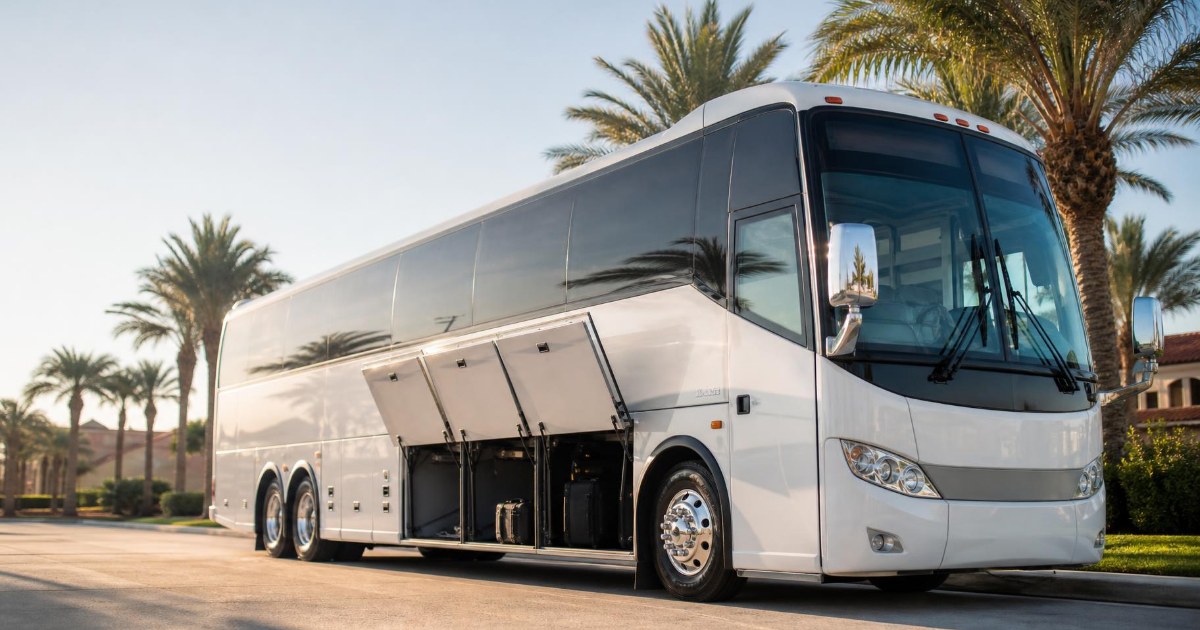
The fleet gives a school four sizes to choose from: a 14 passenger van for small groups, a 34 passenger charter bus for a single class, a 44 passenger school bus for a larger group and a 56 passenger bus for a full grade level. A guide to how many seats a charter bus has helps with the count, and a comparison of a charter bus and a school bus covers the other common choice. Larger coaches carry onboard restrooms, and buses offer Wi-Fi, TV monitors and a PA system so teachers can brief students on the ride. ADA-accessible buses are available at no extra charge.
Drop-off is built around the sites. Buses stage along Avenue E and unload near Alamo Plaza, and drivers use the designated drop-off zones at the Witte Museum and take students directly to The DoSeum. At San Antonio Missions National Historical Park, buses can unload at Mission San José or Mission Concepción.
Before booking any bus company, check its record. A free federal bus safety lookup shows a company's safety rating, whether it is authorized to carry passengers and whether it has active insurance on file. Our federal operating authority is listed on our about page.
Choosing Your San Antonio Field Trip
Start with the unit your students are studying, pick the subject that fits, and match the site to the grade band. A history class has the Alamo, the missions and Casa Navarro. A science class has Scobee, the Witte and Government Canyon. An arts class has museums and stages. When the destination is set, you can request a quote on our contact page with your date, headcount and drop-off stops, and we will build the transportation around your day.