The number of seats on a charter bus depends on the vehicle, and a full-size coach is the largest single vehicle most groups book. At Distance Brothers Charters & Tours, that coach seats up to 56 passengers. The fleet starts with a 14-passenger van and climbs through a 34-passenger charter bus and a 44-passenger school bus to the 56-passenger bus.
This post walks through each size, how long each one runs, and how many people really fit once luggage, gear and legroom enter the picture. With those numbers in hand, you can match your headcount to a vehicle before you ask for a quote. That keeps you from paying for empty seats and from squeezing a group into a bus that is too small.
How Many Seats Are on a Charter Bus? Seat Counts by Bus Size
Charter bus sizes fall into four classes: the passenger van, the mid-size charter bus (often called a mini-coach), the full-size motorcoach and the school bus. Distance Brothers runs one vehicle in each class, and the seat counts below come from its vehicle pages.
| Vehicle | Seats | Suited for |
|---|---|---|
| 14-passenger van | 14 | Airport transfers, corporate outings, family trips and private events |
| 34-passenger charter bus | 34 | Conferences, weddings, sports tournaments and church retreats |
| 44-passenger school bus | 44 | Sports teams, family reunions and daily site shuttles |
| 56-passenger bus | 54 to 56 | Long-distance trips, school trips, corporate outings and large events |
The vehicles work as a ladder. The van suits a family or a small team. The 34-passenger charter bus covers mid-size groups that want Wi-Fi, outlets and a TV on board. The 44-passenger school bus is a practical choice for teams, reunions and shuttles. The 56-passenger bus carries the largest groups on the longest trips.
The 56-passenger bus is also listed on the site as a 54/56-passenger motor coach, and the next section explains why that count has a range. Every rental includes a licensed, professional driver at no additional cost.
A seat count is a ceiling. Luggage, accessibility equipment and trip length all bring the comfortable number below it, and the sections ahead show by how much.
How Many Seats on a Coach Bus? The Full-Size Motorcoach
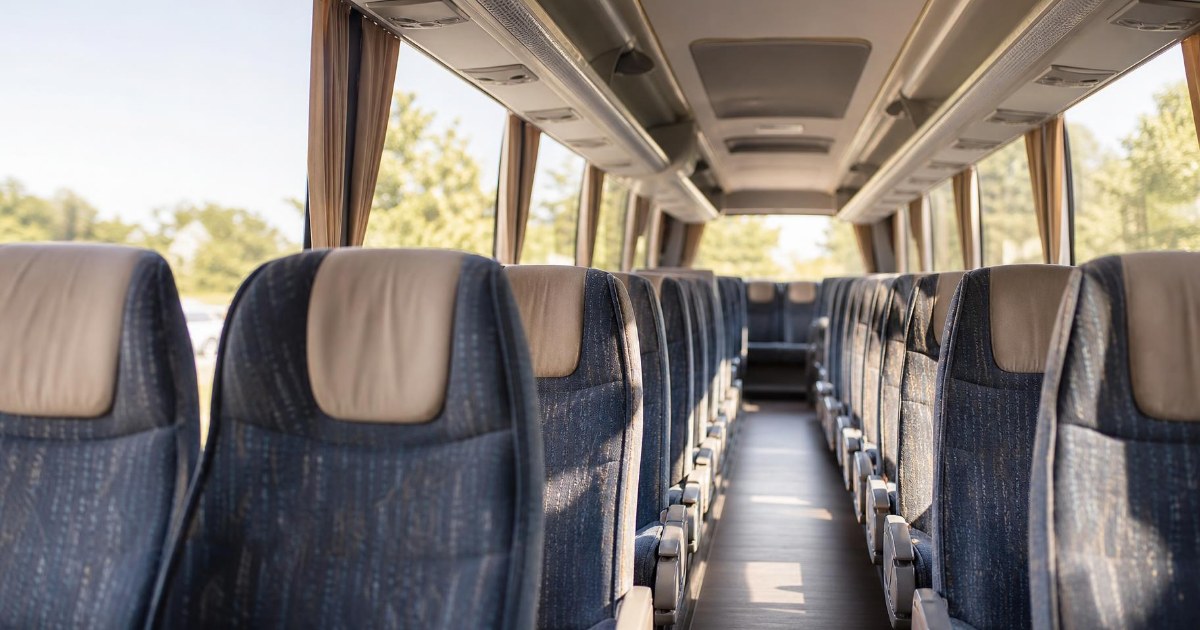
A full-size coach has two seats on each side of a center aisle. That two-and-two layout gives every rider an aisle or a window and keeps the cabin easy to walk through on a long trip. At Distance Brothers, a full-size coach seats 54 to 56 passengers.
The range exists because the equipment on board changes the layout. An onboard restroom takes floor space that would otherwise hold seats. A wheelchair lift and the securement positions that go with it replace a few seats. Executive-style seating, with wider seats and more room to recline, fits fewer rows into the same length. A coach with several of these features can sit at the low end of the range, and a coach with fewer of them can sit at the top.
Most full-size coaches are what the industry calls over-the-road buses. Federal rules define an over-the-road bus as one with an elevated passenger deck over a baggage compartment. That raised deck is why a coach has deep luggage bays below the seats and a clear view from the windows above them.
Distance Brothers' full-size coaches include Van Hool, Setra, MCI, TEMSA and Prevost models. The 56-passenger bus lists Wi-Fi, power outlets, an onboard restroom, a TV, luggage storage, extra legroom and reclining seats. Each of those features adds comfort, and the restroom is the one that most often shapes the final seat count.
Smaller Charter Buses: The 34-Passenger Bus and 14-Passenger Van
Some groups never need a full coach. A group of 25 on a 56-seat bus leaves half the seats empty, and a smaller vehicle often fits the plan better.
The 34-passenger charter bus is the mid-size option. Its page lists Wi-Fi, outlets, a TV and DVD player, reclining seats, luggage storage and a climate-controlled cabin. It suits conferences, weddings, sports tournaments and church retreats, where the group is large enough to need a bus and small enough to fill it.
The 14-passenger van fits airport transfers, corporate outings, family trips and private events. It also gives the most freedom at the curb. Because a smaller vehicle turns more easily and stops in tighter spots, it works well for local runs and pickup points where a full coach would struggle.
Choose the smaller vehicle when the pickup point is tight, when the trip stays local, or when the headcount would leave a coach half empty. A van or mid-size bus also keeps the group closer together, which many teams and families like.
Seat counts at this size matter on the operating side too. Federal rules require a CDL with the right endorsement for any vehicle designed to carry 16 or more passengers, driver included. A 14-passenger van with its driver carries 15 people, one short of that line. Every Distance Brothers rental comes with a licensed, professional driver, so the license question is already handled for your group.
School Bus Seating: Why a Rating Can Mean Fewer Adults
A school bus rating comes from how the manufacturer counts riders, and the count assumes small children. According to federal guidance, manufacturers set maximum capacity at three small elementary students per typical 39-inch seat. The same guidance says transportation providers generally seat three smaller elementary students or two adult high school students on one seat.
That difference changes the math for adult groups. When a rating assumes three riders on every seat, putting two adults or teenagers on each seat brings the usable count down by about a third. Ask how a school bus rating was counted before you plan an adult group around it.
Distance Brothers' 44-passenger school bus is a full-size bus built for long journeys, with comfortable seating, overhead storage and luggage space. The site describes it as a practical and economical choice for daily crew runs on its construction site shuttles page, where the 44-passenger school bus sits beside the larger coach and the smaller vehicles in the fleet.
When you request a quote, share the ages of your riders along with the headcount. A group of elementary students and a group of adults can need different seating plans on the same bus.
How Long Is a Charter Bus?
Length decides where a bus can stop. A hotel entrance, a school loop, a venue lot and a downtown street all have limits, and a longer bus needs more room to pull in, turn and pull out.
The law sets the outer edge. Texas allows a motor vehicle other than a truck-tractor to run no longer than 45 feet. Width has a limit as well, and the federal standard for commercial vehicles on the National Network is 102 inches. A full-size coach is built to operate inside both numbers, so the 56-passenger bus is the longest vehicle in the Distance Brothers fleet and the 14-passenger van is the shortest.
A shorter vehicle saves time at the curb. A van or a mid-size bus can pull into a tight hotel drive or a crowded school loop and leave again without a long maneuver. A full coach does best at venues with a wide lot or a clear loading zone.
Tell the team where the group will load and unload when you ask for a quote. The pickup and drop-off spots can decide which vehicle fits the trip.
How Many People Fit on a Charter Bus Comfortably?
The seat count is the most people a bus can carry. The number that keeps everyone comfortable is usually a few seats lower, and several parts of the trip decide how many.
Start with spare seats. Groups add last-minute riders, chaperones and guests, and a few open seats absorb them without a second vehicle. Luggage comes next. A full-size coach carries bags in under-floor bays, so the cabin stays open for riders on an overnight trip. Smaller vehicles have less storage, and a group of 14 with large suitcases can fill a van before every seat is taken.
Team gear and instruments change the count as well. Equipment bags and instrument cases take room that riders would otherwise use, so teams and bands often move up one size. Trip length matters too. A short local run suits snug seating, and an all-day drive is better with extra legroom. The 56-passenger bus lists more legroom among its features.
Plan early for riders who use wheelchairs. Distance Brothers can set up an ADA-compliant coach with a wheelchair lift. Under federal rules, a charter operator must provide an accessible over-the-road bus on 48 hours' advance notice. Because the lift and securement positions take the place of some seats, tell the team about these riders when you book.
Newer coaches also have seat belts. New over-the-road buses built from November 2016 onward must have lap and shoulder belts at every passenger seat, so each rider needs their own seat.
Matching Your Headcount to the Right Bus
Start with the number of riders and add a small buffer. A group of up to 12 or 13 fits the 14-passenger van. Groups from about 15 to 30 fit the 34-passenger charter bus. Groups near 35 to 44 can use the 44-passenger school bus, and adult groups at that size often prefer the 56-passenger bus for the extra room. Groups from about 45 up to 56 fit the 56-passenger bus.
A group of more than 56 needs more than one vehicle. The mix can include different sizes, such as one full-size coach plus a 34-passenger bus, which keeps a group of 85 or so from paying for seats it will not fill. Distance Brothers helps groups find the best combination when a single bus cannot carry everyone.
For an accurate quote, gather four details: your travel dates, your passenger count, a list of stops, and the amenities you want, such as Wi-Fi, luggage storage or ADA-accessible features. The post on how charter bus rental pricing works shows how those details shape the final number.
The same four vehicles serve every part of the service area, including Corpus Christi, San Antonio, the Rio Grande Valley, Laredo and Victoria. A group in any of those cities can choose from the van, the 34-passenger bus, the 44-passenger school bus and the 56-passenger bus.
The size ladder is short: 14 seats in the van, 34 in the mid-size bus, 44 in the school bus and up to 56 in the full-size coach. Pick the rung that fits your riders, their luggage and your pickup spots, and the trip starts on the right footing. When your numbers are ready, use the site's Get a Quote page and send your dates, headcount and stops.